

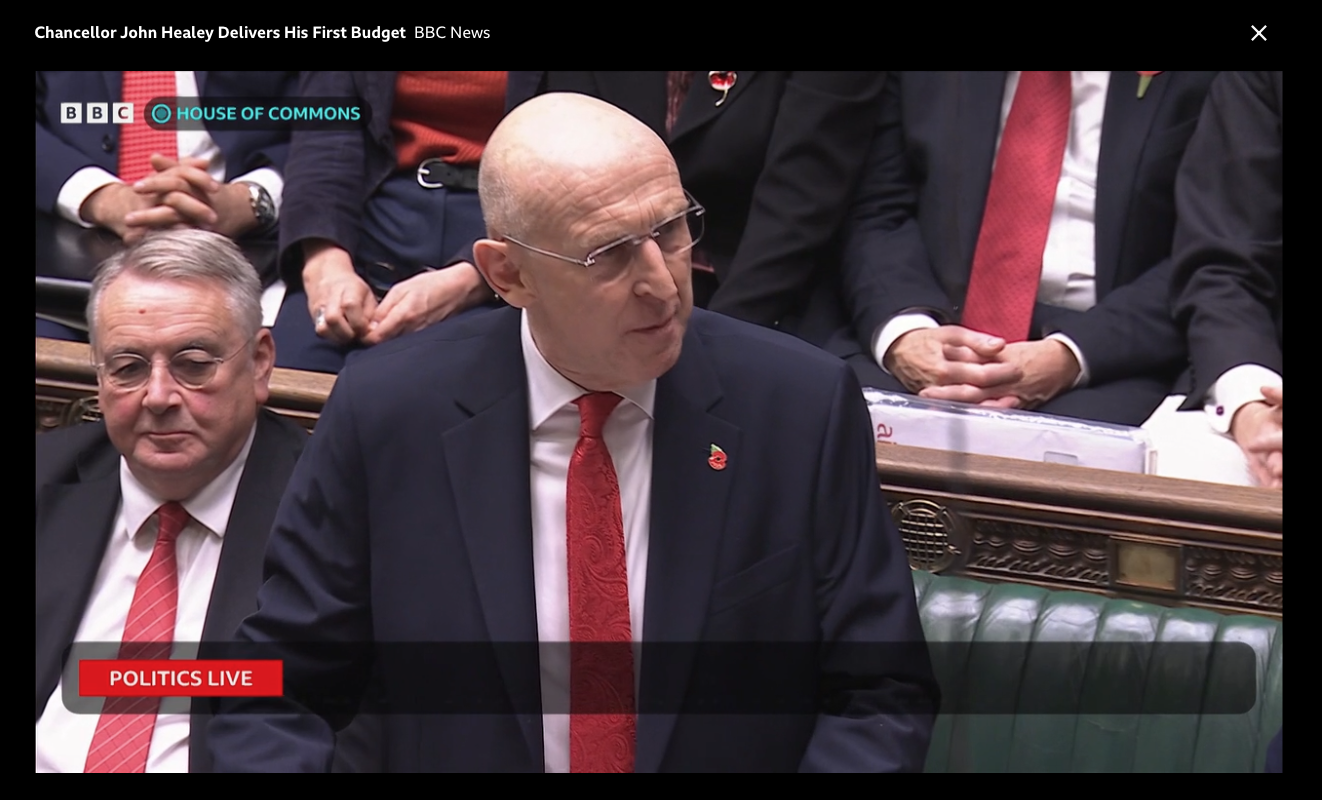
After some fairly eventful Budgets in recent years, today’s Autumn Budget felt rather different.
There was no single blockbuster announcement. Instead, the Chancellor delivered a flotilla of smaller tax measures, each relatively modest in isolation but collectively raising revenue across different parts of the tax system.
Perhaps “steady as it goes” is the best way to describe it.
No headline income tax rise, but changes underneath
For many individuals, one of the main takeaways will be what did not change. There was no increase in the rates of income tax on employment income or dividends, and the tax-free ISA allowance remains unchanged.
However, from April 2027, the rates applying to property and savings income will increase by 2 percentage points.
That will particularly affect landlords, who have already faced increasing costs and restrictions on tax relief for residential property finance costs, as well as savers and investors with significant income outside tax-efficient wrappers.
Business owners and investment
Business owners also face a reduction in the lifetime limit for Business Asset Disposal Relief (BADR) from £1 million to £500,000.
For those contemplating a sale, retirement or succession, this is potentially significant and reinforces the importance of reviewing plans well in advance.
There was better news for companies investing in plant and machinery, with full expensing retained alongside changes to the first-year and writing-down allowances.
A flotilla of smaller measures
Elsewhere, the Budget takes a targeted approach to raising revenue.
Banks face a higher corporation tax surcharge, parts of the gambling industry will pay more tax, and online marketplaces will take greater responsibility for collecting VAT on behalf of UK sellers. Small British brewers and cider makers, meanwhile, receive some additional alcohol duty relief.
Individually, these measures may appear fairly modest. Taken together, however, they allow the Chancellor to raise additional revenue without resorting to a large increase in the headline rates of personal taxation.
HMRC is also set to receive stronger powers to recover unpaid tax directly from bank accounts where taxpayers have failed to respond to enquiries. The detail and safeguards will be important, but it serves as another reminder that HMRC correspondence should never simply be ignored.
Looking further ahead, from 2029 the Government intends to reform Self Assessment so that taxpayers make smaller, more regular tax payments rather than facing larger periodic bills.
Steady as it goes, but not “nothing to see here”
Overall, this was not a Budget of sweeping tax reform. Instead, we have a flotilla of smaller measures targeted at different taxpayers, sectors and sources of income.
For many individuals and businesses, the absence of a major headline tax rise may come as something of a relief. But “steady as it goes” should not be confused with “nothing to do”.
Landlords, savers and business owners in particular should consider how the changes may affect their plans.
At Dafferns, we will be reviewing the detail behind the announcements and considering what they mean for our clients.
If you would like to discuss how the Autumn Budget 2026 may affect you, your family or your business, please speak to your usual Dafferns contact.
 Business valuations
 Cross border taxes
 Private client and personal tax
 Trusts, IHT and estate planning